Infrastructure of Opportunity

Africa is not short of talent.
It is short of pathways.

The Walvis Bay Circular Industry & Composite Innovation Centre converts end-of-life aircraft, heavy mining equipment, and other industrial assets into a platform for youth training, circular-economy employment, and clean energy on Namibia’s Atlantic coast.

Four Strategic Pillars. One self-funding platform. Built by Phoenix Resource Association.

100–150
Youth trained per year
4
Strategic Pillars
USD 3.9M
Year-5 revenue, modelled
~26%
Year-5 EBITDA margin
What this is

One category. One claim.

Infrastructure of Opportunity is the institutional, industrial, and educational infrastructure that converts Africa’s underused human and material capacity into productive economies. In Phoenix Resource Association’s model, it takes physical form as Circular Economy Centres — campuses where end-of-life industrial assets are dismantled into commercial value, and where the young people written off by their economies are trained into the skilled workforce those economies need. It is not a programme, a project, or a pilot. It is the layer of institutions, industrial systems, and accredited training that has been missing — the layer above “NEET training”, “TVET initiative”, “youth employment programme”, or “circular economy startup”, each of which is a sub-component, not the whole. When the infrastructure is built, opportunity stops depending on luck or rescue, and becomes a feature the system itself produces at scale.

Phoenix Resource Association · Category Statement, adopted April 2026
The problem

Youth without work. Value without recovery.

Across Southern Africa, young people with capability, drive, and potential are waiting for a pathway. A high proportion are classified as NEET — not in employment, education, or training — not because the talent is absent, but because the structure to connect it has never been built. In the same regions, mining districts and secondary airports hold growing numbers of redundant industrial assets: haul trucks, excavators, crushers, fixed plant, abandoned aircraft. These realities exist side by side, but are rarely connected.

“The biggest waste is not the metal in a redundant haul truck or the carbon fibre in a retired aircraft. It is the opportunity that never connects young talent to a real pathway.”

RECLAIM

Recovering stranded industrial assets and the potential of young people who have been overlooked.

BUILD

Constructing the accredited skills pathways, infrastructure, and circular enterprises that connect talent to opportunity.

RISE

Creating the conditions for graduates, communities, and economies to rise together.

The flagship

Walvis Bay: where the model touches the ground.

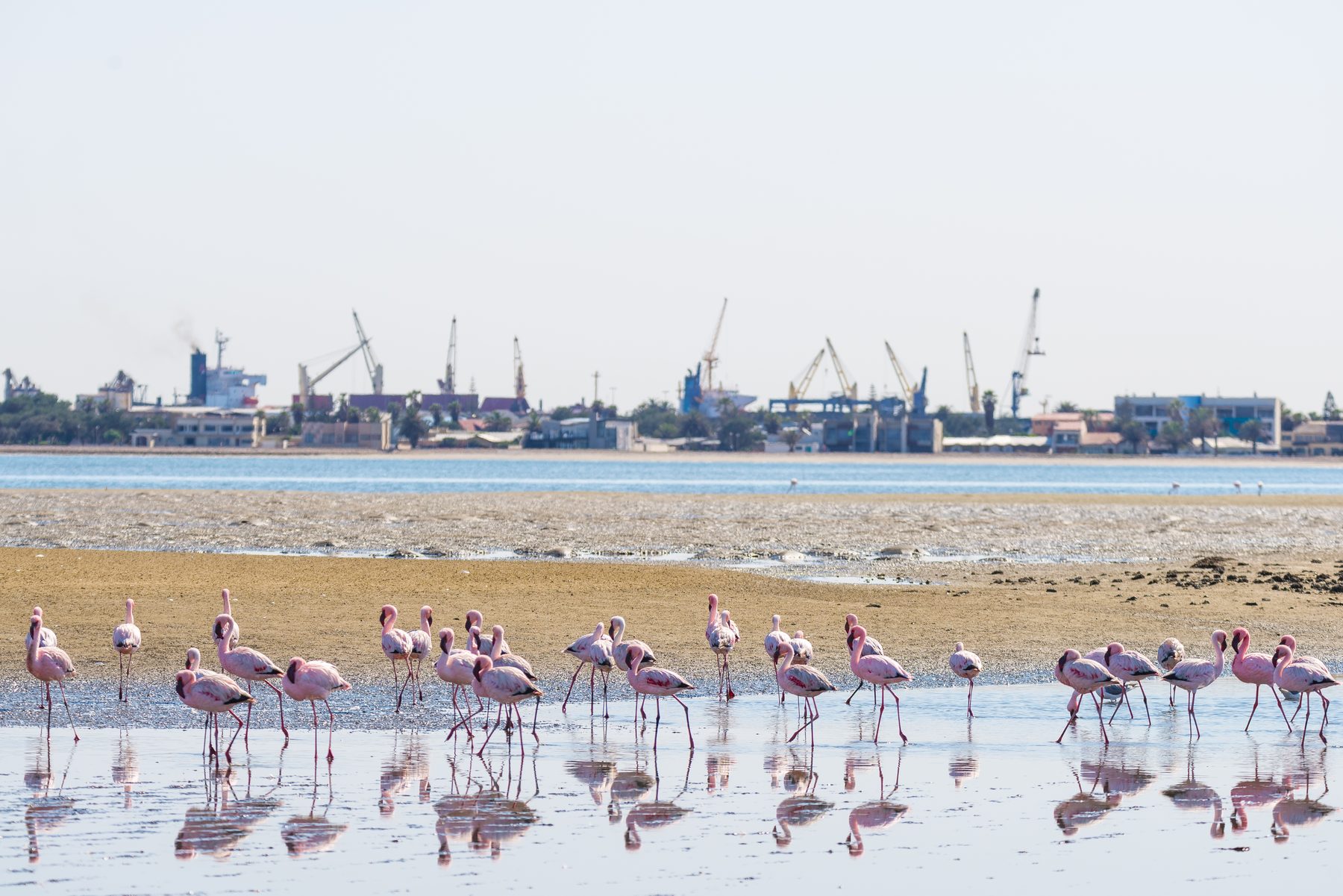
Southern Africa’s deep-water gateway: a working port, an airport, industrial land, SEZ-style potential, and corridors reaching six countries. Walvis Bay sits at the centre of Namibia’s green hydrogen and industrialisation agenda — and Namibia needs visible, real-economy industrial projects that consume green power locally, youth skills programmes tied to new green industries, and partnerships that connect hydrogen, logistics, manufacturing, and circular economy in a single narrative.

The Walvis Bay Circular Industry & Composite Innovation Centre is designed to meet exactly that need. Concept first submitted to NIPDB in March 2026; updated July 2026 on the back of a NIPDB-convened week of institutional meetings in-country.

MoU with NIPDB in drafting Site engagement moved to specifics Integrated financial model complete EIF interest in micro-grid co-financing
Flamingos in the lagoon at Walvis Bay with the working port behind them
Walvis Bay: the lagoon and the working port, side by side.
The Centre

Four Strategic Pillars. One integrated platform.

The Centre adapts Phoenix Resource Association’s Circular Economy Centre blueprint to the Namibian setting. Each pillar reinforces the others: assets feed training, training feeds operations, operations fund the mission.

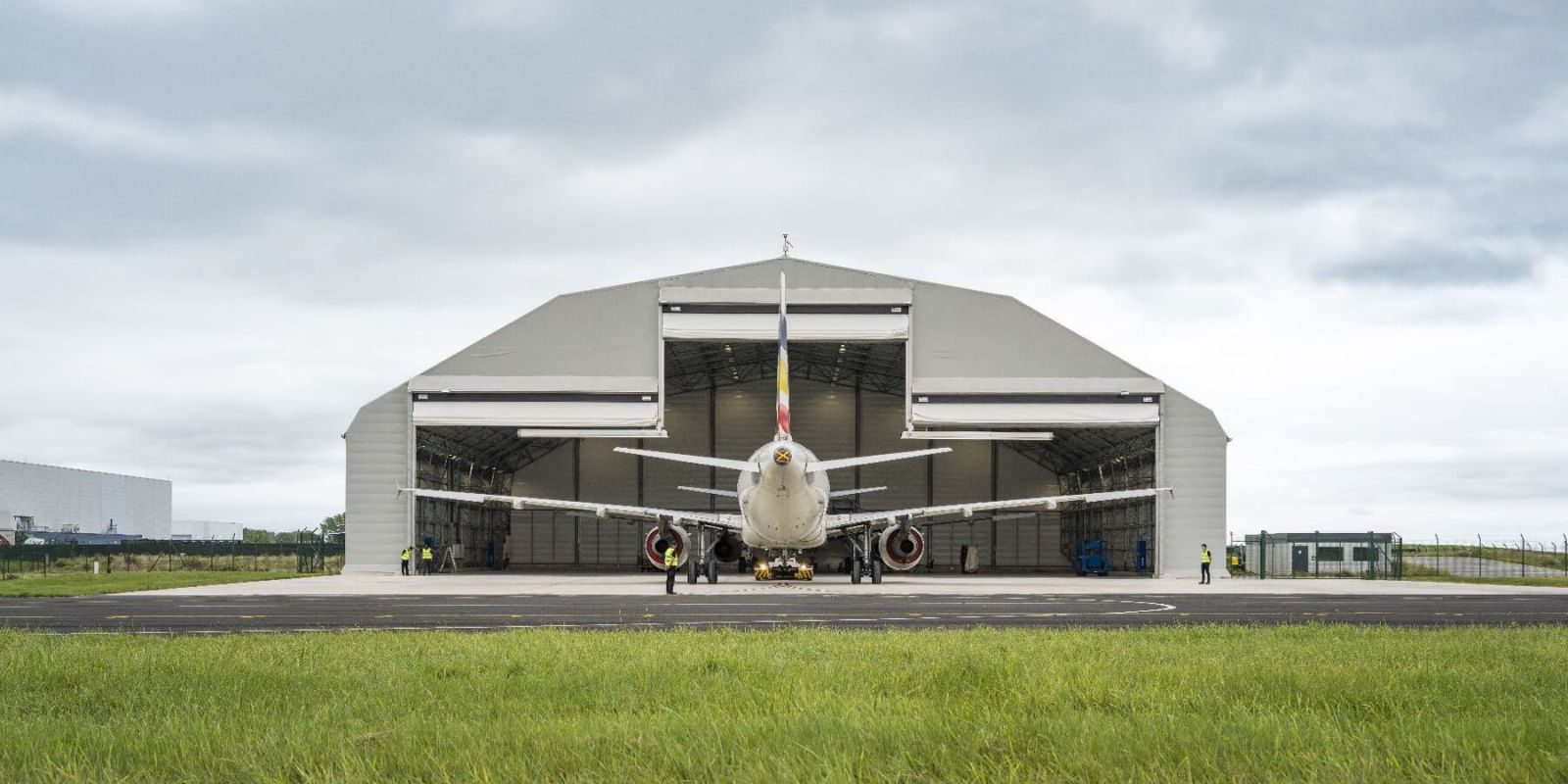
An end-of-life airframe positioned in front of a maintenance hangar
Strategic Pillar 1

Industrial Dismantling & Metals Circularity

A dedicated dismantling and depollution facility for end-of-life aircraft, heavy mining equipment, and related industrial assets, operating under documented standard operating procedures.

  • Machine-level traceability: assets received, materials recovered, hazards handled
  • Recovered metals channelled into local and regional value chains
  • Service contracts with mines, airlines, lessors, and OEMs

A group of students working together outdoors with laptops and notebooks
Strategic Pillar 2

Youth Training Institute & Residential Village · PICI

A Namibia campus of the Phoenix Institute for Circular Industries: accredited programmes with on-site dormitories, open to learners from across Namibia and the SADC region.

  • Welding, mechanics, industrial electrics, HSE, solar operations, circular entrepreneurship
  • 100–150 youth and early-career technicians per year, residential
  • Trainees embedded directly into operational teams; NEET focus, gender inclusion
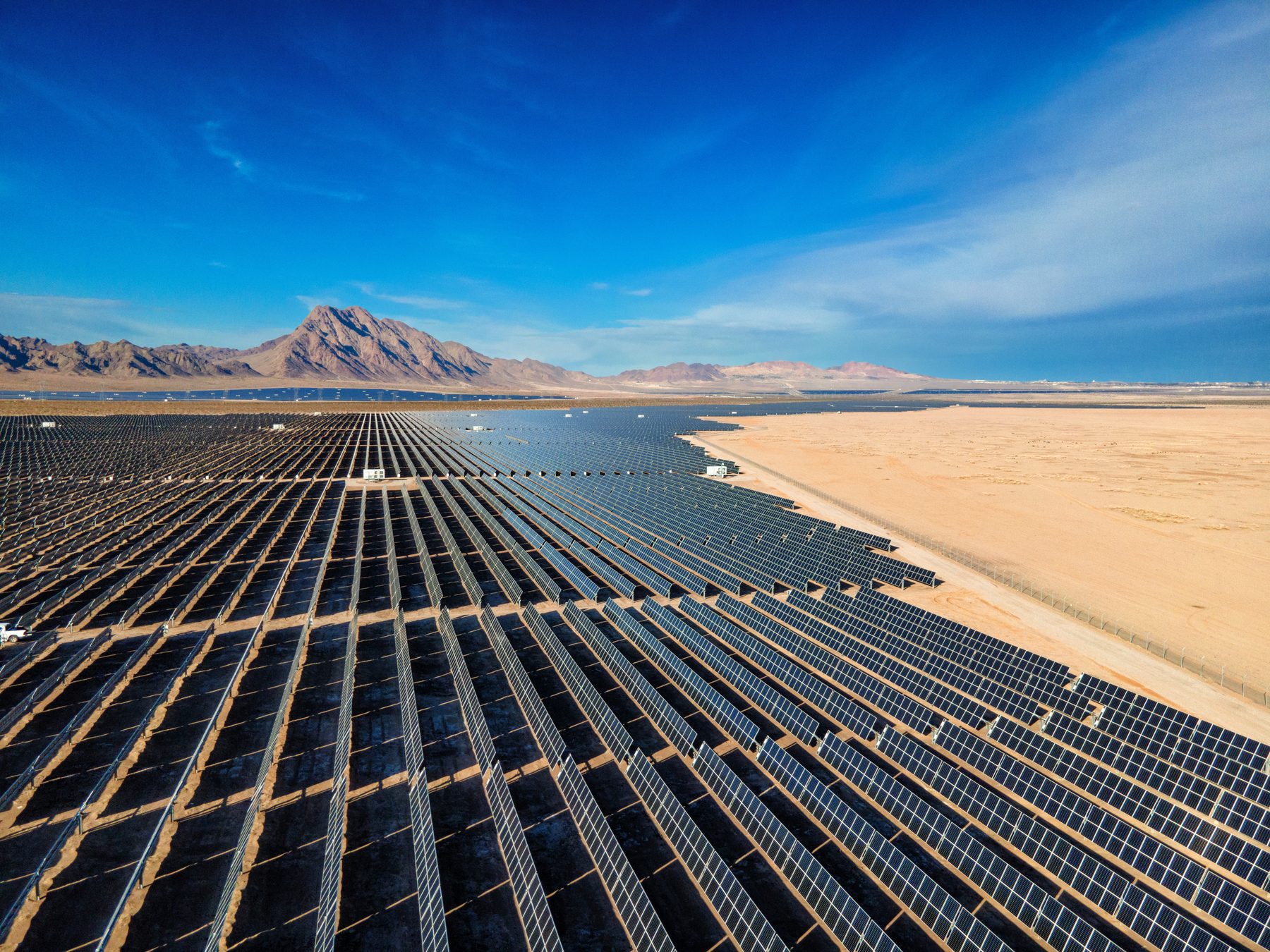
A large coastal solar array under a clear sky
Strategic Pillar 3

Solar-Hybrid Micro-Grid

Reliable, low-carbon power for the dismantling yard, training facilities, and residential village, plus selected nearby productive users — designed as a mini-utility with transparent tariffs and performance monitoring.

  • Hands-on platform for training mini-grid technicians and energy managers
  • Designed to interface with hydrogen-related infrastructure
  • A tangible link between Namibia’s hydrogen agenda and local industrial use
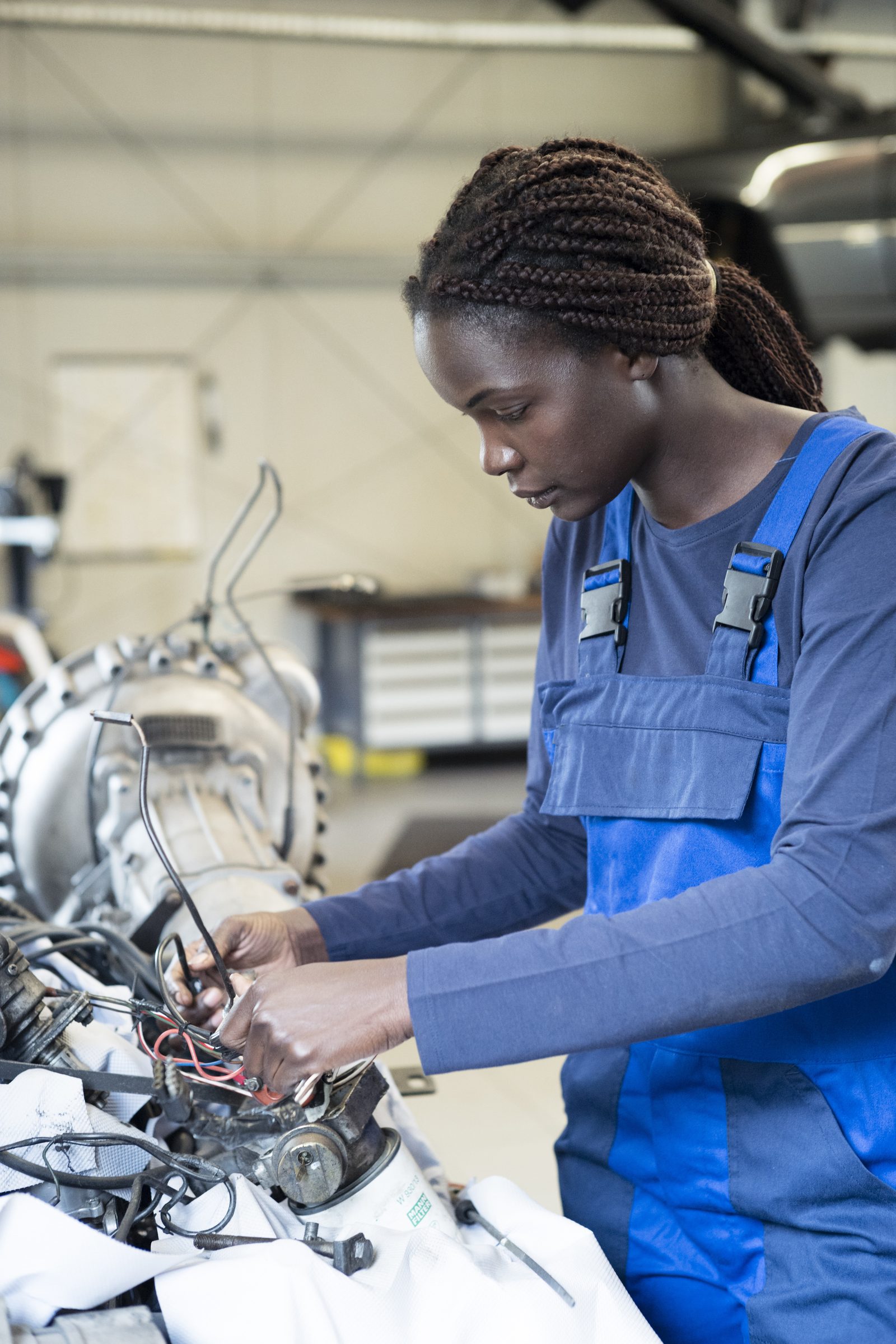
A technician working on an engine assembly in a workshop
Strategic Pillar 4

Composite Materials & Green Hydrogen Innovation

An innovation pillar, not the primary revenue line: safe dismantling and segregation of CFRP and GFRP, composite skills in the PICI curriculum, and a renewables-powered pilot lab generating transparent data on costs, emissions, and occupational risks.

  • Joint research with NUST, UNAM, and a SADC research network
  • Youth-led micro-enterprises and policy dialogue
  • A trusted site for OEM composite take-back and recycling pilots
A gap in global leadership

Africa’s first serious composite circularity testbed.

Composite materials — CFRP and GFRP — are critical to lighter aircraft, wind turbines, and hydrogen infrastructure. Yet composite end-of-life management is one of the hardest unsolved problems in circularity: most composite waste is still landfilled, incinerated, or downcycled, and no region holds a clear, integrated leadership position. That is a genuine opportunity for Namibia: Walvis Bay, under strong governance, as Africa’s first serious composite end-of-life testbed and innovation partner.

Composite activities will scale only as fast as safeguards, evidence, and partnerships allow.
The pattern

The capacity was always there.

In 2001, a thirteen-year-old boy in Malawi was forced out of school when his family could no longer pay the fees. During a devastating famine, he found his way to the village library, taught himself electrical engineering from a physics textbook, and built a wind turbine from scrap metal that pumped water to his family’s crops. He saved his village.

His name is William Kamkwamba. He went on to Dartmouth College and later founded the Moving Windmills Project. His story has been told in a book and a Netflix film.

But William’s story is not extraordinary because of what he did. It is extraordinary because of what it reveals: Africa is full of young people like William. They are not short of talent or creativity or drive. They are short of a pathway.

Beneficiaries & impact

Who rises when the Centre runs.

100–150
Direct, per year

NEET youth aged 18–30 from Namibia and SADC, trained and housed on the residential campus, with pathways into employment and SME creation.

500+
Indirect

Host communities near Walvis Bay, local SMEs served by the micro-grid, and government TVET agencies strengthened by the platform.

SADC-wide
Systemic

Aviation OEMs, mining operators, and future CEC replication sites across the region: a multi-country, systemic effect.

Inputs

Capital from government, PRA, DFIs and donors; stranded-asset feedstock; land and enabling infrastructure.

Activities

Dismantling and metals recovery; accredited PICI training; micro-grid operation; composite R&D.

Outputs

100–150 youth trained annually; certified metals into regional value chains; clean energy supplied.

Outcomes

Formal, decent employment and SME creation; reduced waste and unstructured scrap exports.

Impact

Structural contribution to green industrialisation, NEET reduction, and Walvis Bay as a regional circular hub.

SDG 4 — Quality Education SDG 8 — Decent Work and Economic Growth SDG 9 — Industry, Innovation and Infrastructure SDG 10 — Reduced Inequalities SDG 12 — Responsible Consumption and Production SDG 13 — Climate Action SDG 17 — Partnerships for the Goals

Aligned with NDP6 and Vision 2030, Namibia’s Green Hydrogen Strategy, ILO Decent Work principles, and UN Global Compact Labour Principles. Safeguarding and gender inclusion are embedded in curriculum design and operational standards.

Implementation

A phased road, already moving.

The project is structured in four phases. As at mid-2026, Phase 1 is underway: the Memorandum of Understanding is in drafting and site engagement is in progress.

Months 1–6Underway

Endorsement & Mobilisation

NIPDB endorsement and focal-team designation; site identification at Walvis Bay; initial ministry and university engagement, including letters of intent from NUST and UNAM.

Months 7–18

Pre-Feasibility & Project Preparation

Technical, financial, and environmental-and-social pre-feasibility; composite risk and opportunity assessment; DFI engagement; research partnership framework and baseline data package.

Years 2–3

Site Development & Mobilisation

Enabling infrastructure; industrial dismantling yard; PICI training institute and residential village; solar-hybrid micro-grid installation. CEC operational, PICI Cohort 1 enrolled, composite pilot lab established.

Year 4 and beyond

Full Operations & Scale

Full dismantling operations; composite evidence review and scale decisions; SADC replication design. Year-5 steady-state revenues of approximately USD 3.7–4.1M at a whole-Centre EBITDA of approximately 26%.

How it’s financed

An economic model, not a subsidy line.

The Centre is built to produce revenue and cover its own operating costs by year five. Revenues are diversified across dismantling and recycling fees, training and programme funding, micro-grid revenues, and innovation partnership income. Grants fund the mission layer; the operating business pays for itself.

Total indicative capital
Per the July 2026 integrated financial model; refined during pre-feasibility
~USD 54.5M
Enabling infrastructure
Land, roads, utilities, zoning — government and public partners
Shared
Industrial, training & energy assets
Dismantling facilities, PICI campus, micro-grid — PRA, impact investors, DFI co-financing
Shared
Organisational seed fund
Platform incubation, 18–24 months — philanthropic capital
USD 1.5–2M

The detailed capital-responsibility breakdown, with CAPEX, OPEX, revenue and financing scenarios, is available to qualified partners through the diligence pack.

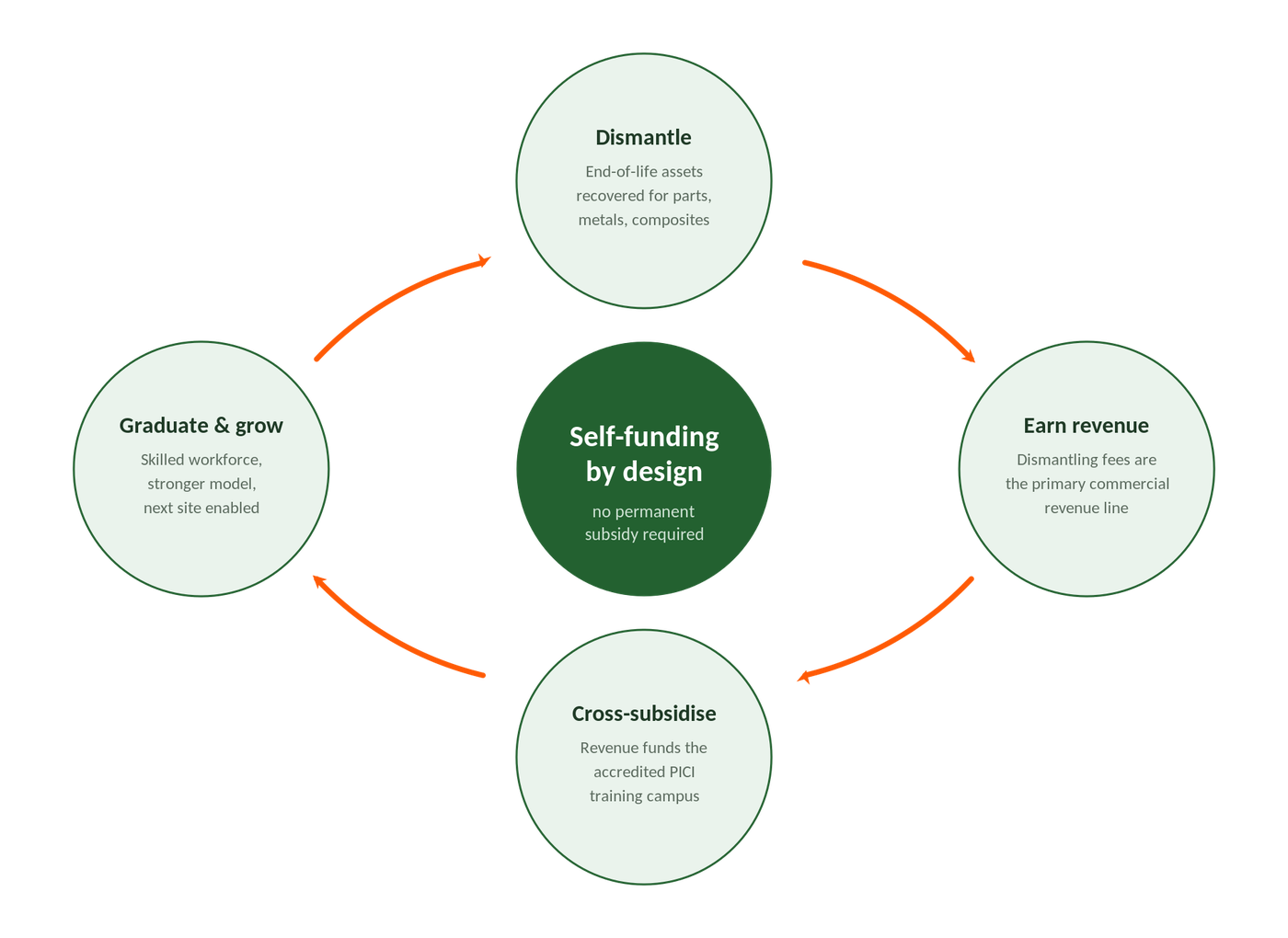
Self-funding by design: a four-step cycle — dismantle end-of-life assets, earn revenue from dismantling fees, cross-subsidise the accredited PICI training campus, graduate and grow — requiring no permanent subsidy
Self-funding by design: dismantling revenue carries the training mission.
USD 3.9M
Year-5 revenue, modelled

Steady-state estimate of USD 3.7–4.1M, modelled at USD 3.9M in the July 2026 integrated financial model.

~26%
Year-5 EBITDA margin

Whole-Centre operating margin after staff, feedstock handling, and utilities.

USD 1.5–2M
Seed to launch

Organisational seed funding carries the platform through incubation and pre-feasibility.

Source: PRA integrated financial model, July 2026 · WB-CEC Concept Note v2. No feedstock commitments are announced; lessor and AFRA-accredited partner approaches are in progress.

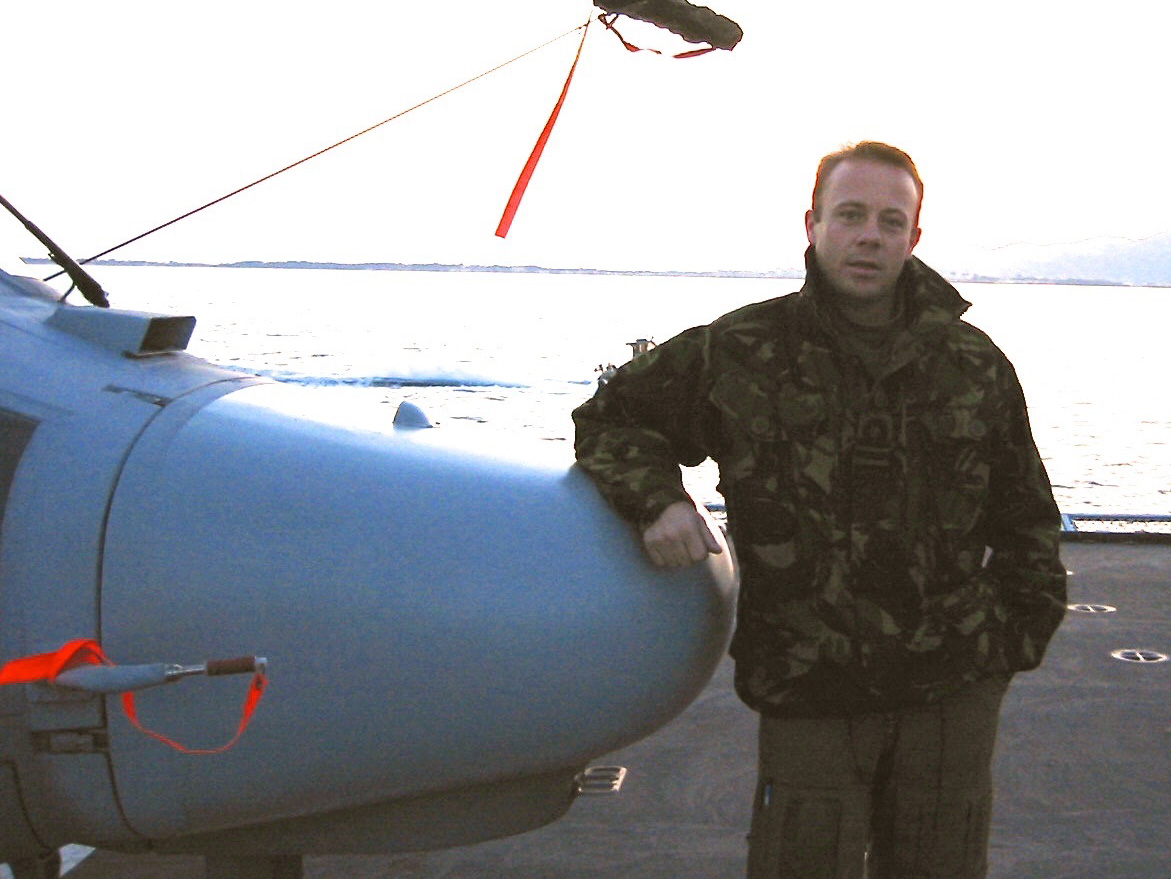
David Mercer, Royal Navy helicopter pilot, on a flight deck
About the founder

An operator’s problem, met with operator instincts.

Most NEET programmes start with a classroom. Phoenix Resource Association starts with an asset. Founder David Mercer spent seventeen years on Royal Navy flight decks and a decade in airline cockpits, with an Executive MBA from the University of Geneva layered in between. Aviation, logistics, and command run on exactly the discipline the NEET conversation has been missing: hard infrastructure, accredited competencies, measurable outcomes, cross-cultural delivery at pace.

Africa’s young people are not a problem to be managed. They are an asset waiting for a pathway.

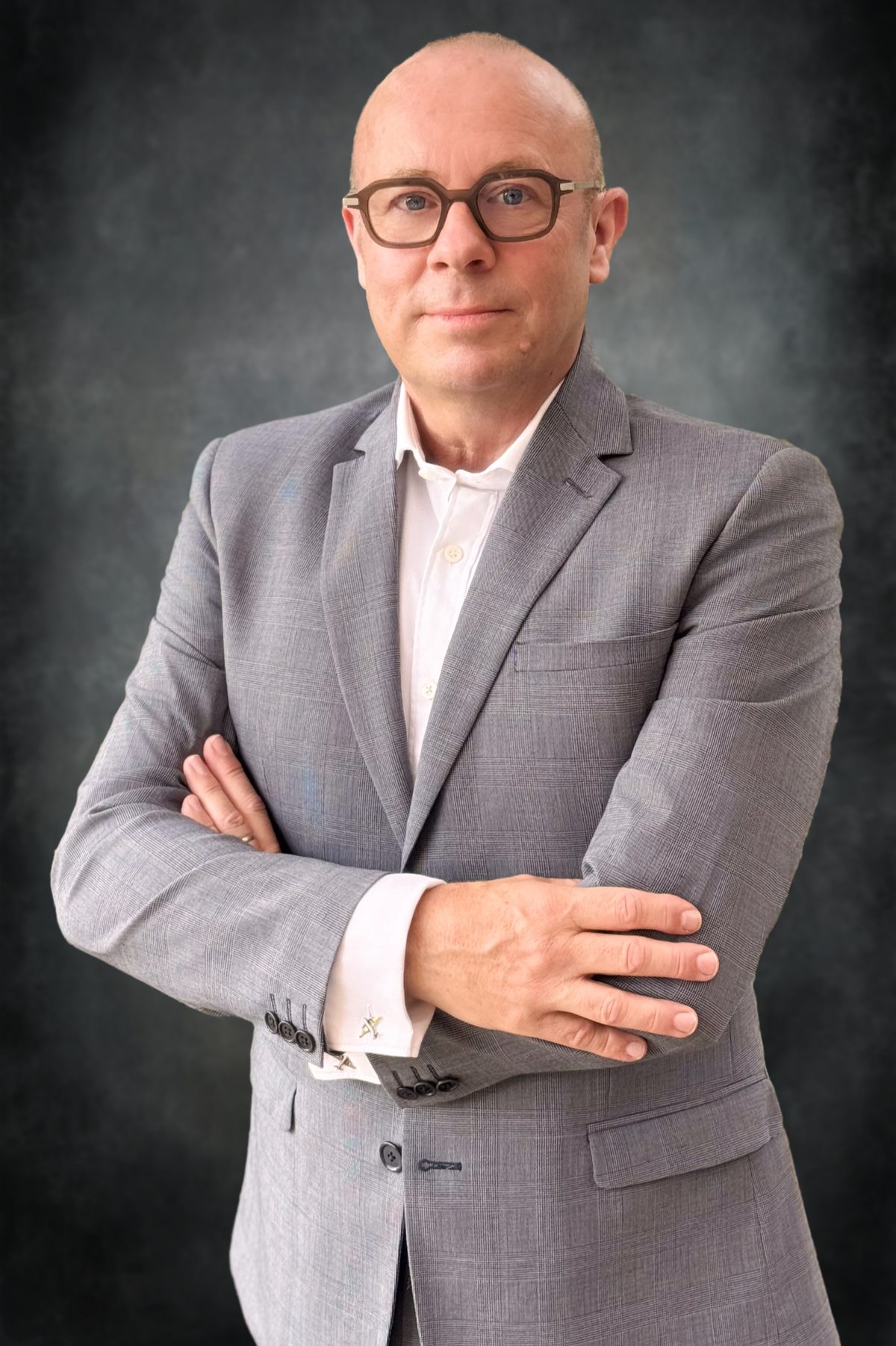
David Mercer is Founder and Executive Director of Phoenix Resource Association, a Geneva-based Swiss non-profit building Africa’s first network of Circular Economy Centres for NEET youth across SADC. Founder succession, by design →

Leadership

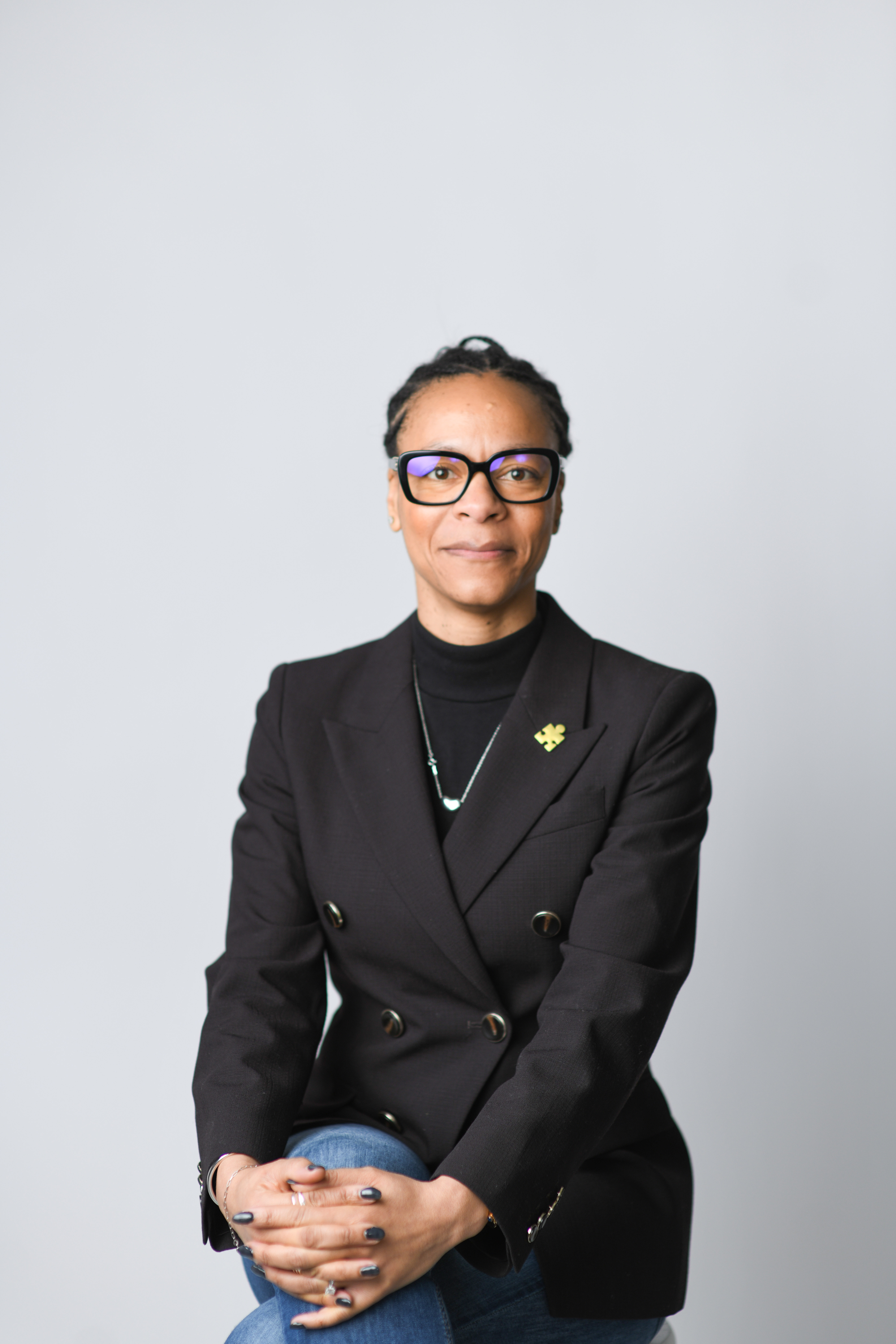
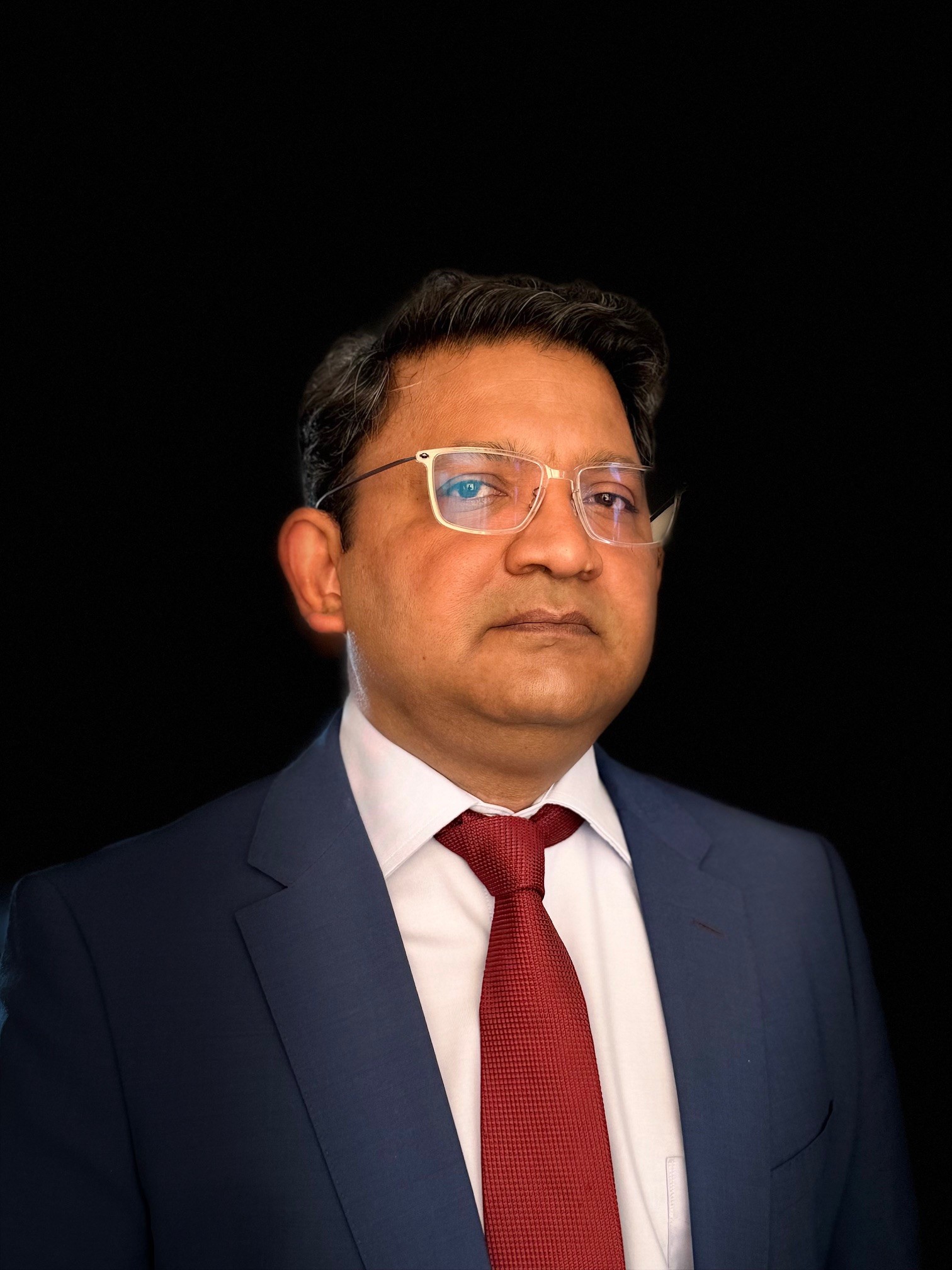
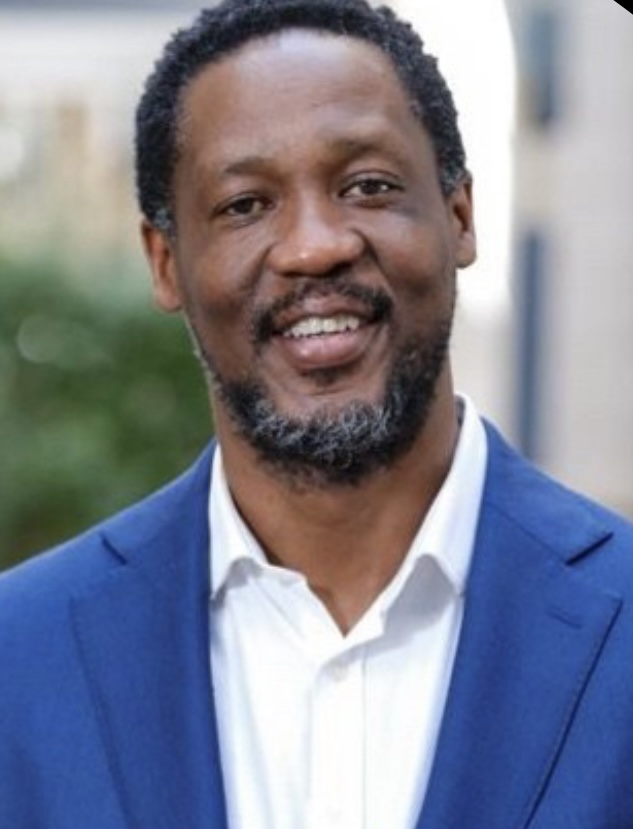
Governance built before the funding asks.

Chaired by founder David Mercer, the governance team draws on senior experience at Pictet, Boeing, Standard Chartered, the DBSA, the African Development Bank, and Botswana’s public service. A mission-lock golden share, held by the Phoenix Resource Foundation in each CEC operating entity, keeps commercial operations subordinate to youth, jobs, and circular-economy outcomes.

David Mercer
Chair & Executive Director

David Mercer

Strategy & Partnerships

Founder. Executive leadership across all workstreams. Former Royal Navy helicopter pilot and airline captain; Executive MBA, University of Geneva.

Association Secretary

Kevin Wainscott

Governance Administration

Private Equity Real Assets at Pictet Group. Digital transformation executive and COO. EMBA (IMD); former airline captain. Certified in impact investing, ESG, and AI & data analytics.

Israil Bryan
NED — Workforce, People & Social Impact

Israil Bryan

People, Impact & Safeguarding Lead

Senior HR and social impact professional. Corporate experience at Boeing and Standard Chartered. Expertise in ILO Decent Work, DEI frameworks and youth safeguarding.

Leo Tony
Advisor — Aviation & Digital Technology

Leo Tony

Technology & Infrastructure Lead

Aviation industry expert covering MRO, airside infrastructure, OEM relationships and aviation-safety compliance. Advises on digital learning systems, VR simulation and CEC campus design.

Boineelo Lobelo
NED — African ESG & Public-Sector (SADC)

Boineelo Lobelo

SADC Engagement & ESG Lead

Deputy Executive Director, Botswana Public Service College. More than 20 years spanning public service, government ministries and the private sector. Former Deputy Permanent Secretary for Labour and Social Security.

Zakhele Mayisa
NED — Fundraising & Development Finance

Zakhele Mayisa

Fundraising & Development Finance Lead

Infrastructure finance practitioner. DBSA (9+ years), African Development Bank, New Development Bank, and Nedbank CIB Co-Head of Africa Infrastructure Finance.

Traction · June 2026

A week in Namibia. Doors opened.

From 12 to 19 June 2026, PRA spent a week in Windhoek and Walvis Bay, hosted and convened by the Namibia Investment Promotion and Development Board. The programme brought the Centre to the institutions that can help bring it into being: development finance, environmental investment, industrial land, ports, and airports. The warmth and seriousness across government, finance, ports and industry told us something simple: the appetite is there.

NIPDB
Host and convenor of the week
NIDA
Industrial development and land
EIF
Environmental Investment Fund of Namibia
DBN
Development Bank of Namibia
Namport
Namibia Ports Authority
NAC
Namibia Airports Company
Near-term milestone

AGIS 2026: PRA on the main stage.

The African Green Industries Summit, 9–10 September 2026 in Swakopmund, Namibia, hosted by the Government of Namibia and endorsed by the Ministry of Industries, Mines and Energy, is where PRA brings the Walvis Bay Centre to the institutions and investors who can carry it forward.

David Mercer speaks on Panel 8, Local Content and Empowerment · Day 2, Thursday 10 September, 10:50–11:30.

Partners at the table: NIPDB · NamPower · Namport · Namibia Green Hydrogen Programme · africangreenindustries.com →

9–10
September 2026
600+
Delegates
10+
Ministers
100+
Youth participants
How we partner

Five ways to engage.

A partnership with Phoenix Resource Association creates real, auditable value for your organisation while placing you at the centre of Africa’s circular economy development. Five partnership types, each with a clear value exchange.

Type 01

Feedstock Partner

Provide end-of-life aircraft and mining equipment to process at the Centre. The industrial core of the model runs on your equipment retirement strategy.

Type 02

Standards & Accreditation

Technical validation, safety protocols, curriculum quality assurance, and regulatory credibility: the legitimacy that unlocks everything else.

Type 03

Academic Partner

Curriculum development, research collaboration, student articulation, and accreditation pathways — alongside NUST, UNAM, and the SADC research network.

Type 04

Technology & Equipment

LMS platforms, digital learning tools, hardware, and campus connectivity to power the innovation pillar and the Academy.

Type 05

Funder / Investor

Foundations and development finance institutions partnering across operational grants, seed capital, and site-level development finance.

Diligence pack

The paperwork, already built.

PRA operates as a funder-ready institution, not a concept note. The documents below are assembled and current. Qualified partners conducting diligence can request access; we share under mutual NDA.

Governance

  • Governance Charter v3
  • Statutes (Swiss Verein, Geneva)
  • Conflict of Interest Policy v1
  • Safeguarding Policy v1
  • Risk Register v2 (32 risks scored)
  • Data Protection Policy v1 (Swiss nFADP + GDPR)
  • Founder Role Description v1
  • Founder Trajectory Visual

Financial

  • Integrated financial model (Jul 2026) — on request
  • Annual Budget FY2026
  • CEC OPEX v3.1 (USD 3.3M / 5 yr)
  • WB-CEC CAPEX v1 (USD 54.5M)
  • Benchmarking PRA v2

Strategy & MEL

  • Theory of Change v1.1 (5-stage causal chain)
  • MEL Framework PoC v1 (~21 indicators)
  • Phase 0 Staffing Plan v2 (12 FTE / 24 mo)
  • Funding Architecture v2

Partnership

  • Signed ALA MoU + Addendum (Feb 2026)
  • PICI Master Reference v1.1
  • NIPDB Re-engagement Package (Apr 2026)

Namibia concept

  • WB-CEC Concept Note v2 (Jul 2026)
  • Walvis Bay site analysis
  • NDP6 alignment memo
  • AfCAC / NCAA pathway note

Shared under mutual NDA, within 3 working days of request verification.

Get in touch

Let’s build what comes next.

Phoenix Resource Association is actively engaging partners across five types: feedstock, standards, academic, technology, and funding. If your organisation sees a role in what we are building, the quickest way in is a direct conversation.

David Mercer
Founder & Executive Director
Phoenix Resource Association
Geneva, Switzerland
+41 (0)22 539 46 97
david@phoenixresource.org
phoenixresource.org